From Chaos to Clarity: How to Build a Feedback Management System
Feedback without a system is noise. Here's how to build a feedback management system that turns customer input into clear, actionable product decisions — regardless of team size.
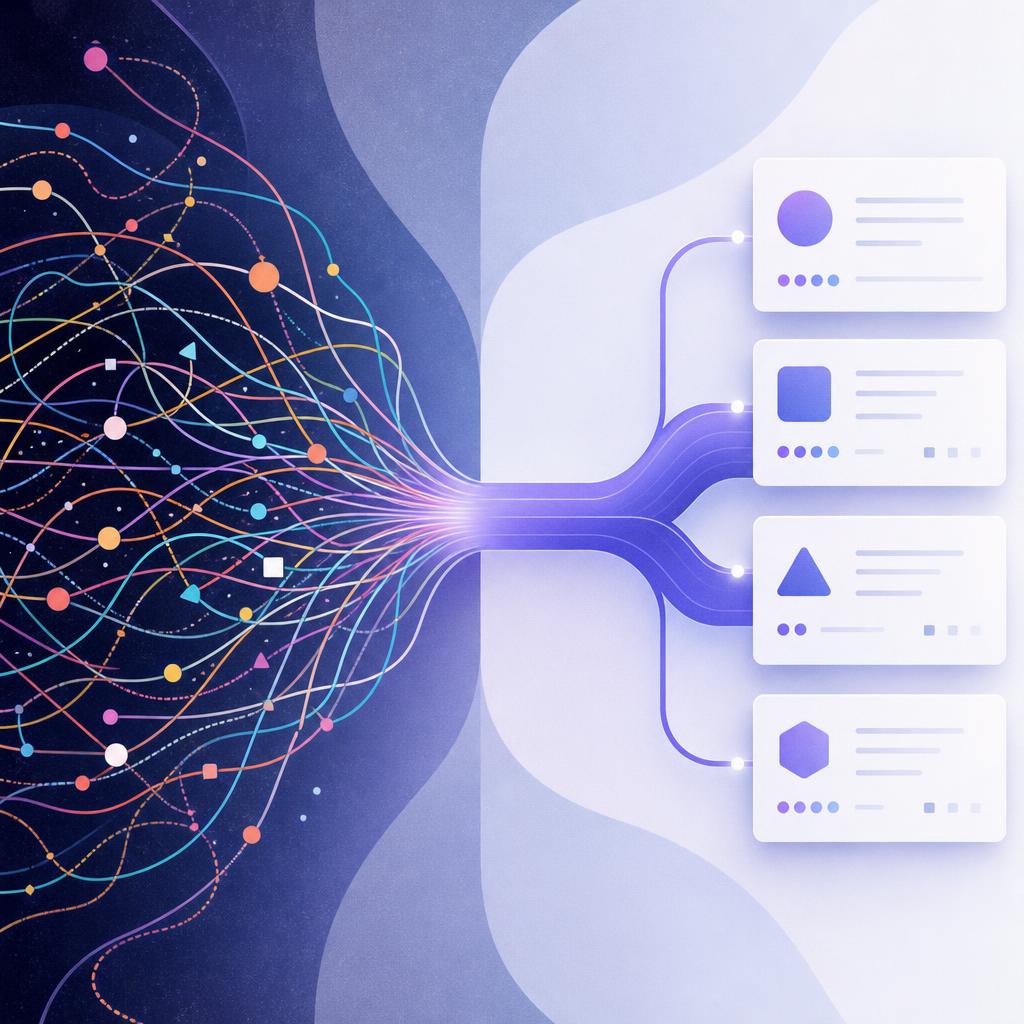
Feedback without a system is noise. Here's how to build a feedback management system that turns customer input into clear, actionable product decisions — regardless of team size.
Most product teams collect more feedback than they can process. The inbox fills with customer emails, support escalations, Slack messages from the sales team, and NPS survey comments. There's no system. Nothing links. Feedback stays in whatever tool it arrived in, siloed from the roadmap and from engineering.
The result: teams make decisions based on whoever shouted loudest recently. Good ideas go untracked. Duplicate requests get built twice. Customers who submitted thoughtful feedback hear nothing back and eventually stop submitting.
What a Good Feedback Management System Does
- Captures feedback from all channels in one place
- Classifies and organizes each item without manual tagging
- Links feedback to your roadmap features
- Prioritizes based on volume, revenue, and sentiment — not recency or loudness
- Enables closing the loop when features ship
- Creates visibility for CS, sales, and leadership without manual reporting
Phase 1: Consolidate Your Channels
Connect as many feedback sources as possible to a single inbox. Start with the 2–3 highest-volume channels and add others over time. Typically: in-app widget + support tool + direct email covers 70–80% of feedback volume for most B2B SaaS teams.
Phase 2: Implement Triage
The categories you need for good triage:
- Type: Feature Request | Bug Report | UX Issue | Question | Complaint | Praise
- Sentiment: Positive | Neutral | Negative | Frustrated
- Urgency: Critical | High | Medium | Low
- Roadmap link: Which existing feature does this relate to?
AI handles these classifications with 85–90%+ accuracy and processes items in seconds. The PM's role shifts from tagging to reviewing edge cases and making final decisions on linked roadmap items.
Phase 3: Connect Feedback to the Roadmap
Every incoming piece of feedback should be linked to a roadmap item. When you're reviewing the roadmap and wondering "why did we decide to prioritize this?", the answer should be one click away: 47 customers requested it, representing $340,000 in MRR.
Phase 4: Establish a Weekly Feedback Review
30–45 minutes where the PM, a CS representative, and optionally a product designer review top feedback themes from the past week, new high-priority items, churn risk signals, and anything that doesn't fit the existing roadmap and might need a new feature.
Phase 5: Build the Close-the-Loop Workflow
When a feature ships, the system should know which customers requested it — and notify them. The minimum viable workflow:
- PM marks a feature as "Shipped" in the roadmap
- System identifies all customers whose feedback was linked to this feature
- Personalized email goes out to each customer referencing their specific request
- Engagement metrics are logged
Phase 6: Create Stakeholder Visibility
- CS team: Access to feedback from their accounts without asking the PM
- Sales team: Access to public roadmap status for accurate prospect communication
- Leadership: Weekly summary of top themes, priority movements, and churn risk signals — auto-generated, not manually produced
Metrics for a Healthy Feedback System
- Feedback volume by channel: Are you capturing from all major channels?
- Triage lag: How long from submission to classification? Target: under 24 hours
- Roadmap coverage: What percentage of feedback items are linked to a roadmap item?
- Close-the-loop rate: What percentage of shipped features had feedback linked and notifications sent?
Building a feedback management system pays off over months and years, not weeks. The teams that build it early find their roadmap decisions get sharper, customer relationships get stronger, and planning cycles get shorter — because the information is there when they need it, organized the way they need it, and connected to the roadmap where it can actually drive decisions.
Build the workflow around the decision
The strongest product teams connect this practice to the work around it: capture the signal, make the decision, communicate the change, and help customers reach the outcome.
- Supportly is useful for the support escalations around this workflow.
- Guidez is useful for the in-product guidance around this workflow.
Use Kandidly to keep the customer evidence and product decision connected from first request to shipped outcome.
More in How-To & Guides
Connect your product workflow. Start shipping products.
Kandidly gives your team one AI-powered home for feedback, features, roadmaps, and releases. Less overhead. More momentum.


The AI-powered product management platform for modern teams. Feedback, roadmaps, and releases — all in one place.
© 2026 Kandidly LLC. All rights reserved. 30 N Gould St, Sheridan WY 82801.
Proudly an
 Company